
Leaving for work can make even a well-prepared owner wonder whether the day ahead is fair to their dog. The answer is not hidden in the size of the toy basket. A workable routine needs to account for toileting, movement, food, water, rest, companionship, and how the dog actually feels when you leave.
Plan for care first and activities second. A puzzle can occupy part of a morning. It cannot provide a bathroom break, assess an injury, or comfort every dog who struggles with an empty house.
Plan care around your dog’s time alone
There is no useful single schedule for a newly arrived puppy, a healthy adult accustomed to short absences, and a senior dog taking medication. Your arrangement needs to fit your dog’s health, abilities, toilet routine, and existing comfort with being alone.
Write down the time from when you leave until a person can next check on your dog. Include the commute and predictable delays. Then ask whether that interval fits the dog’s demonstrated needs. If it does not, change the care arrangement rather than trying to fill the gap with more food toys.
A midday walker, sitter, trusted friend, or appropriate day-care arrangement may help. Choose according to the individual dog. A busy group setting is not automatically a good solution for a dog who avoids unfamiliar dogs or finds handling difficult. Before agreeing on care, ask who will handle your dog, whether walks are solo or shared, how the caregiver responds to fear, and what happens if a visit is missed. Arrange an introduction while you are present and agree on the update you need after each visit, such as whether your dog went out, drank, ate, or seemed uncomfortable.
Write a workday care plan someone else can use
Fill in the actual door-to-door absence, then assign each care task to a person. These are planning fields, not a recommended number of hours alone.
- Before departure: who handles the toilet break, suitable activity, feeding, water, and final room check?
- First in-person check: who is coming, at what agreed time, and can they enter the home? List the toilet, water, feeding, or medication instructions that apply to your dog.
- If plans slip: who is the backup, how will they be contacted, and do they also have access? Keep your contact and veterinary details with the plan.
- Activities left out: name each item and confirm that its instructions and your observations support that use. Put supervision-only activities away.
- After return: record what the caregiver or camera actually observed, including when the dog rested or showed concerning behavior.
Hypothetical example: a walker has agreed to visit but cannot get into the home. The care gap is still unresolved, even if the dog has a full puzzle toy. Arrange workable access or a different care plan before depending on that visit.
Give the morning some breathing room
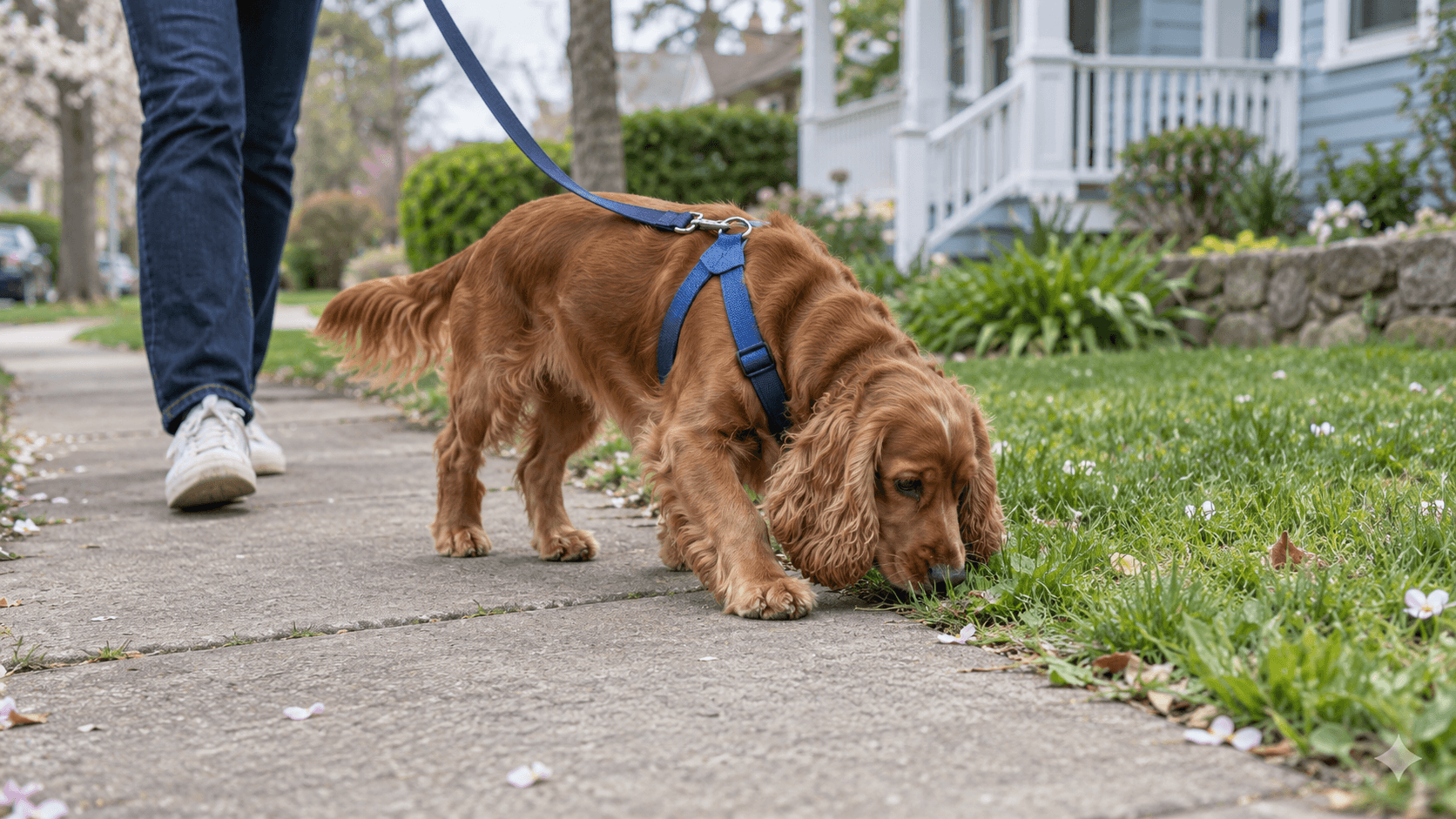
Before departure, allow time for toileting and an activity suited to the weather and your dog’s health. A walk can include opportunities to investigate smells rather than becoming a race to achieve a distance target. Ohio State includes food-based activities, sensory experiences, social interaction, and learning among the ways to enrich a dog’s environment. [1]
Build in a transition afterward. You need time to notice whether your dog is comfortable and ready to rest, not still panting heavily or repeatedly asking to go outside as you reach for your keys.
This is a planning suggestion, not a prescription for a certain number of exercise minutes. If movement is difficult or your dog has a medical condition, ask your veterinarian what kind of activity fits.
Choose activities by their instructions, not their promises
Introduce every new toy while you can watch. Observe whether your dog uses it as intended, tries to swallow it, dismantles it, or becomes frustrated. Check its size, material, condition, and the manufacturer’s restrictions.
The broader decision rule is simple: if the instructions require supervision, save that activity for when someone is present. Familiarity does not cancel the label, and a camera is not a person who can intervene immediately.
For any food activity, account for the food within the daily feeding plan. Difficulty should let the dog succeed without becoming distressed. Do not depend on a new puzzle as the only way to access an essential meal while you are away.
Set up the resting space deliberately
Walk through the area at your dog’s level. Remove access to medicines, food packaging, electrical cords, and objects they are likely to chew or swallow. Check that doors cannot accidentally shut them away from water. Make the sleeping area comfortable and the room temperature appropriate.
Use a confinement arrangement your dog already tolerates comfortably. A crate is not an automatic treatment for distress. If your dog struggles to escape it, changing to a stronger crate does not address the underlying reason and may leave them at risk of injury. Veterinary assessment is needed. [2]
Before relying on the setup, test ordinary short periods while help is close enough to respond. The question is whether the dog can remain comfortable, not how long they can be made to endure the arrangement.
Recognize signs of distress while your dog is alone
A joyful reunion cannot tell you everything about the hours before it. A recording can show whether your dog rests, responds briefly to a sound, or repeatedly paces, vocalizes, drools, or works at an exit. Our guide to signs of boredom in dogs explains why timing and other possible causes matter.
If concerning behavior reliably follows your departure, discuss the pattern with your veterinarian. Other triggers, including noises, may also matter. Avoid assuming that destruction is revenge or that a dog who ignores food merely needs something tastier. Separation-related problems need an individual assessment and may require a veterinary behavior treatment plan. [2]
Do not punish damage when you return. Reward-based training is the approach recommended by the American Veterinary Society of Animal Behavior; aversive methods carry welfare risks and are unnecessary for behavior modification. [3]
Review the routine after work
After work, reconnect in a way your dog enjoys, without treating the evening as a debt that must be repaid through exhausting exercise. Notice whether the overall routine is working across several days. If your dog’s needs change, the schedule should change with them.
A good workday plan leaves room for ordinary life: a satisfying outing, a comfortable nap, dependable care, and a person who knows when the plan needs help.
Continue exploring
Sources
- The Ohio State University College of Veterinary Medicine, Indoor Pet Initiative. Environmental Enrichment for Dogs. Veterinary guidance; accessed September 12, 2026.
- VCA Animal Hospitals. Separation Anxiety in Dogs. Veterinary guidance on presentation and assessment; accessed September 12, 2026.
- American Veterinary Society of Animal Behavior. Position Statements: Humane Dog Training. Professional position statement on training methods; accessed September 12, 2026.
Reviewed: October 27, 2026