
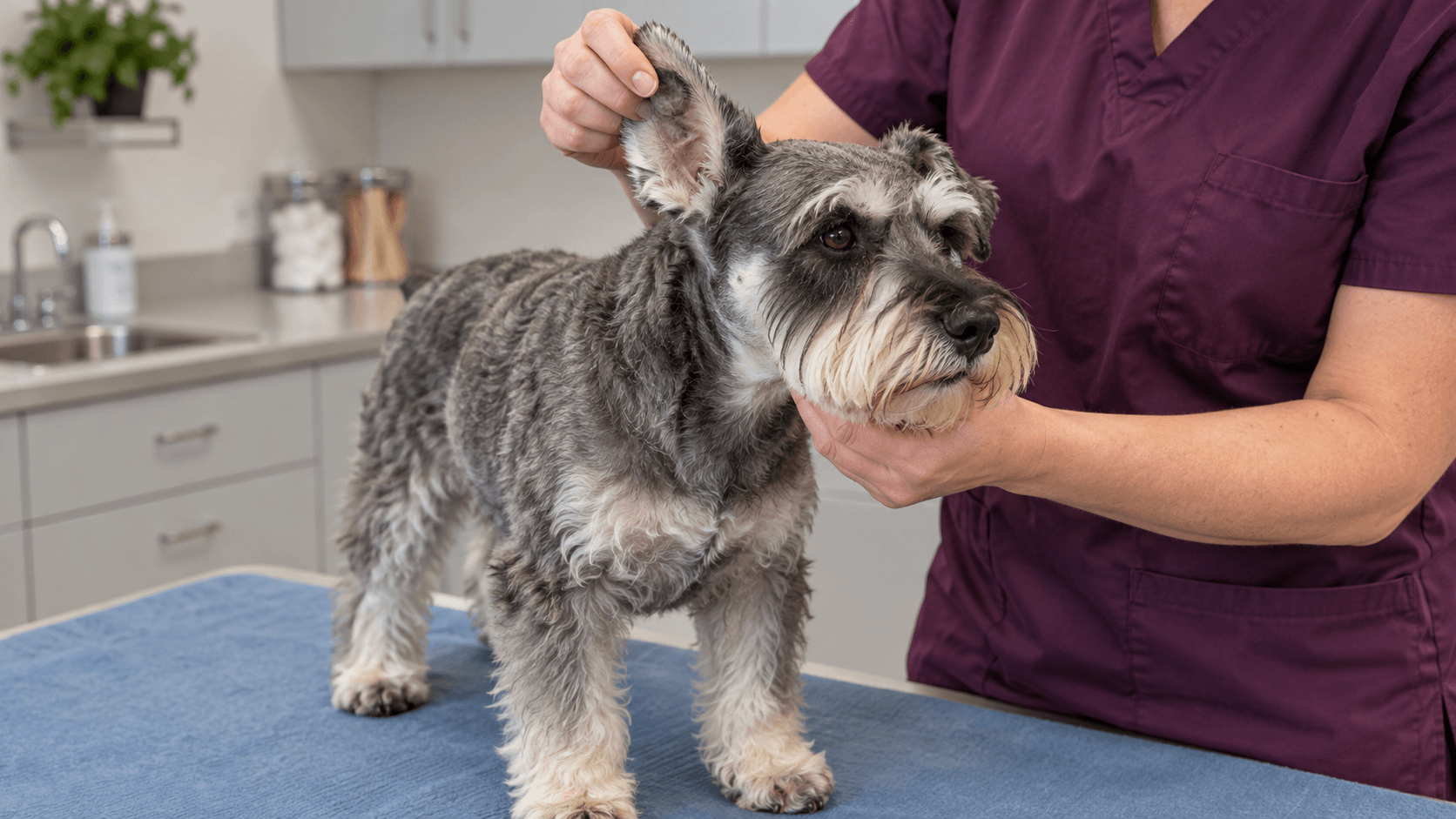
A brief head shake after a bath is one thing. Repeated shaking, scratching, a new odor, or discomfort around an ear is another. It is tempting to reach for an ear cleaner or leftover drops, especially if the problem looks familiar. But similar-looking ear problems can have different causes.
Arrange a veterinary examination for persistent ear scratching or head shaking. Seek urgent veterinary assessment if your dog has a head tilt, loses balance, cannot walk normally, has unusual eye movements, or appears severely painful or unwell. Those signs need more than routine cleaning.
Possible causes of head shaking and ear scratching
Otitis externa means inflammation of the external ear canal. Infection may be involved, but the term itself does not identify bacteria, yeast, mites, or the reason the inflammation developed. The Merck Veterinary Manual describes multiple contributing factors, including allergies, parasites, foreign bodies, and conditions that alter the ear environment. [1]
That is why two red ears, or two episodes in the same dog, should not automatically receive the same treatment. A previous prescription was chosen for a particular problem, at a particular time.
What you can observe without probing
Note whether one or both ears are affected, when the behavior began, and whether it followed swimming, grooming, or an outdoor trip. Mention skin itching elsewhere, including paw licking, and any history of recurring ear problems.
Look only as far as your dog allows comfortably. Redness, visible discharge, swelling, odor, or pain are useful observations, but they cannot reliably identify the cause. VCA’s ear-infection guidance notes that mites and other ear disorders can produce overlapping signs. [2]
Do not push a cotton swab into the canal, pull at a suspected foreign object, or restrain a painful dog so you can clean more deeply. An examination that requires force is best left to a veterinary team with an appropriate comfort and safety plan.
Use a short script when calling the clinic
Have these details ready when you call:
- Timing and side: when the scratching or head shaking began, and whether one ear or both seem affected.
- Visible changes: what you notice without probing or forcing handling, including any odor or discharge.
- Recent context: swimming, grooming, an outing, previous episodes, or itching elsewhere. Say when there is no known trigger.
- Products used: the exact name and time of anything applied, or confirm that nothing has been used.
Call template: “My dog has been [shaking their head or scratching] since [when], affecting [one ear or both]. How soon should we arrange an examination, and should the ear be left untouched before the visit?”
Mention head tilt, balance problems, unusual eye movements, severe pain, or being unwell at the start of the call. These are reasons for urgent assessment, as described above. Say if you cannot inspect the ear comfortably; forcing a closer look is not part of preparing for the appointment.
Keep the product label and previous treatment details available. Similar-looking episodes do not establish that the same drops are appropriate again.
Why the eardrum matters
An otoscope allows the veterinarian to examine the canal and, when possible, the eardrum. Pain, swelling, or accumulated material can make this difficult; some dogs need sedation or additional cleaning under veterinary supervision.
Checking the ear’s condition matters before choosing medication. Some products may be inappropriate when the eardrum is damaged, and treatment may differ if the middle ear is involved. Samples examined under a microscope can help identify organisms and inflammatory material; culture or other tests may be needed in selected cases. [2]
This is not testing for its own sake. It helps avoid guessing at a problem in a space you cannot inspect properly at home.
When head shaking needs urgent veterinary care
The Merck Veterinary Manual describes head tilt, balance and coordination problems, abnormal eye movements, and other changes with middle or inner ear disease. These signs can also have other causes, so they require assessment rather than an assumption about an ear infection. [3]
Keep your dog away from stairs or situations where they could fall while you contact the clinic. Do not delay care to try a cleaner first. Tell the veterinary team when the signs began and whether your dog can stand and walk.
What to avoid while waiting for the appointment
Do not use vinegar, alcohol, essential oils, or a homemade mixture in the ear. Inflamed tissue can be irritated by products that seem mild elsewhere, and the status of the eardrum may be unknown. Merck advises veterinary-directed cleaning and cautions against irritant home remedies. [1]
Ask the clinic whether they want the ear left untouched before sampling. Bring the name of any product already applied and the time it was used. If your dog has an established cleaning plan, ask whether it should continue during this new episode rather than increasing the frequency yourself.
Avoid introducing more moisture until you have guidance. If bathing or swimming seems associated with episodes, mention that history; it may influence an individualized prevention plan.
Why recurring problems need another look
A treatment can reduce organisms or inflammation without removing an underlying tendency. Recurrent disease may require reassessing skin conditions, the ear canal, product use, or another contributing factor. This is one reason follow-up examinations matter. [1]
Ask your veterinarian three practical questions: What was found? What should improve, and when? When should the ear be rechecked? Use medication for the prescribed course and contact the clinic if administration is painful, signs worsen, or improvement does not occur as expected.
The goal is a comfortable ear and a plan that explains the recurrence, not simply fewer head shakes for a few days.
This article is educational and does not diagnose an ear condition or replace an examination.
Continue exploring
Sources
- Roman N; reviewed by Hess L. Ear Infections and Otitis Externa in Dogs. Merck Veterinary Manual. April 2026. Veterinary reference.
- Weir M, Panning A, Ward E. Ear Infections in Dogs (Otitis Externa). VCA Animal Hospitals/LifeLearn. Veterinary diagnostic guidance; accessed September 12, 2026.
- Roman N; reviewed by Hess L. Otitis Media and Interna: Middle and Inner Ear Infections in Dogs. Merck Veterinary Manual. April 2026.