
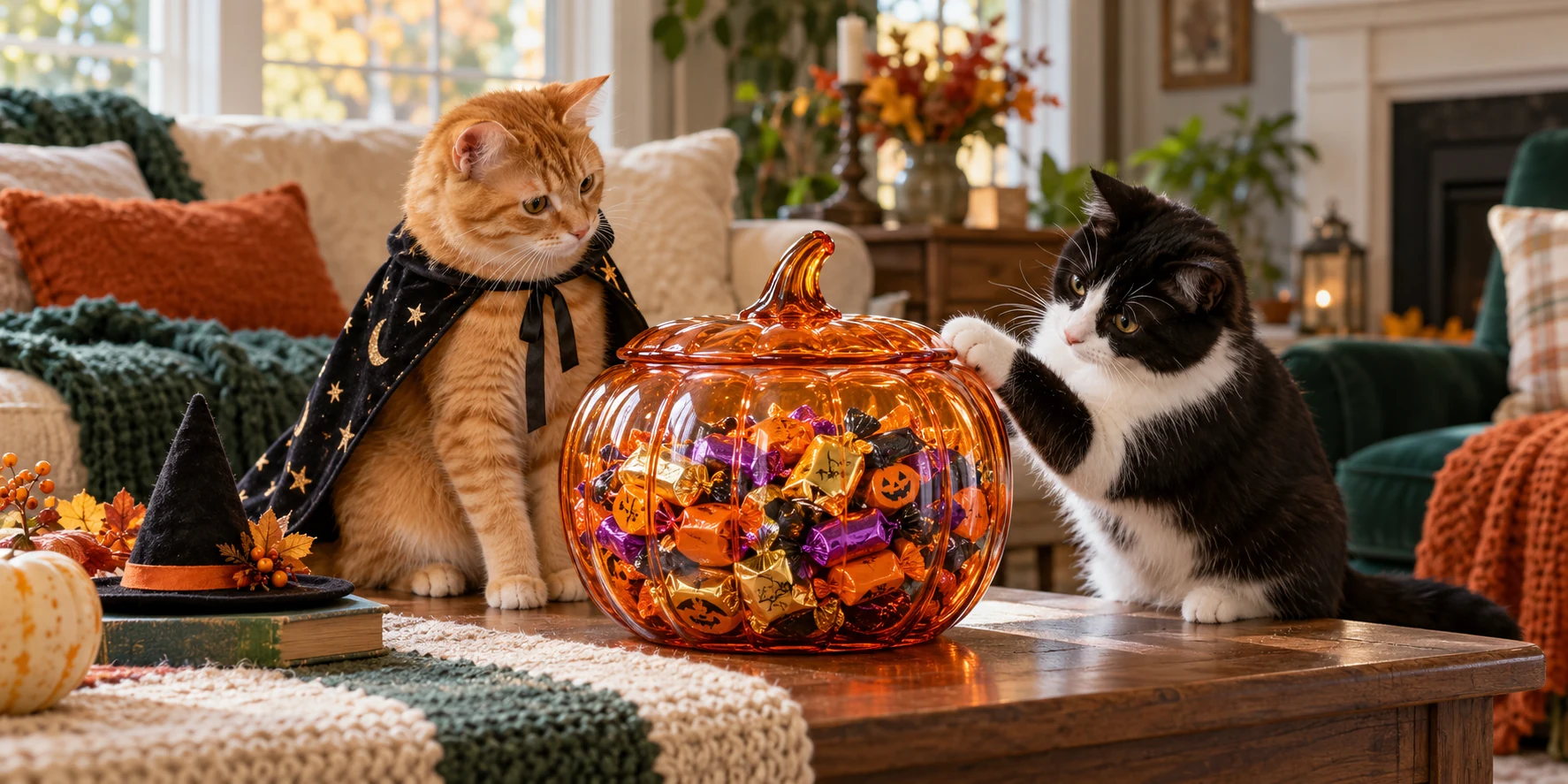
The doorbell rings, a cape swishes past the window, and your pet’s ordinary evening suddenly looks very different. A dog who enjoys familiar visitors may hesitate at a masked stranger. A cat may prefer to watch the whole event from a hiding place.
A little planning gives them room to opt out. This Halloween calm night plan covers what to set up before trick-or-treating, how to respond while visitors arrive, and what to check once the house is quiet again. Start with a comfortable retreat, a secure front-door routine, and candy stored where pets cannot reach it.
Your household Halloween plan
Before the first visitor arrives, agree on these details with everyone at home. Write names and locations in a shared note so nobody has to guess during a busy moment.
| Task | Decide before the evening begins |
|---|---|
| Answering the door | Who will greet visitors, and how will pets remain separated from the opening doorway? |
| Checking on pets | Which adult will check their comfort and stay nearby if needed? Tell that person before handing over responsibility. |
| Preparing the retreat | Which familiar space will each pet use? Set out water, bedding, and suitable hiding places; provide cats with access to a litter box. |
| Storing candy | Which secured cupboard will hold the main supply and children’s collected treats? Keep bags and pockets out of pets’ reach too. |
| Finding help | Save your veterinarian’s number and the nearest emergency veterinary hospital’s contact details before the evening starts. |
| Ending the evening | Who will collect dropped candy, wrappers, and costume pieces, then check doors and gates before pets return to shared rooms? |
If you are managing the evening alone: settle your pet before answering the door. Pause greeting visitors whenever your pet needs your attention. The plan should remain manageable for one person.
If the quiet room does not help: do not assume that closing the door is enough. Reassess the noise, location, and need for familiar company. Follow the guidance below on recognizing distress and seeking veterinary advice.
This is a household planning aid, not a guarantee that every pet will feel comfortable.
Before trick or treating
Make the quiet space familiar
Choose a room your pet already finds comfortable, away from the busiest doorway. Set it up ahead of time with water, bedding, and a resting or hiding spot. For cats, include a litter box away from food and water. A familiar open carrier or cardboard box may provide a place to retreat. Let your pet explore the arrangement before Halloween rather than introducing it during the first burst of doorbell noise.
The ASPCA recommends a comfortable separate room for pets who may find Halloween visitors stressful. [1] Add a simple sign asking guests to leave the room closed, and agree on which adult will check on the animals. In a multi-pet home, use separate spaces if the pets do not reliably relax together.
Offer an activity your pet already enjoys and can use safely. A familiar food puzzle can suit some dogs; a brief play session before settling may suit some cats. Choose toys appropriate for the level of supervision you can provide. Our guide to keeping an indoor cat entertained explains how to offer choices without overwhelming them.
Plan the door and the dog walk
Check that windows, screens, gates, and the quiet-room door close securely. Keep identification tags readable and confirm that the microchip registry has your current contact details. A microchip supports identification if a pet is found; it does not track their location. Our guide to GPS trackers and microchips explains the difference.
Take your dog’s usual walk and bathroom break before the busiest part of the evening. If you need to go out later, use a secure leash and choose a quieter route. If fireworks are likely, plan around them too. Cornell’s noise-fear guidance recommends earlier exercise, secure containment, and leash use when frightened dogs may try to escape. [2]
If your pet has a history of severe noise fear or distress when separated, speak with your veterinarian in advance. The right arrangement may include a familiar person staying nearby. Use any prescribed medication exactly as directed; Halloween night is not the time to improvise a calming treatment.
During the busy part of the evening
Let comfort set the pace
Move pets into their prepared space before repeatedly opening the front door. Close curtains if passing people or decorations are drawing their attention. Low-volume familiar music or television may soften the contrast with outdoor noise; it should not become another loud sound. Stay available to check on your pet, and offer calm company if they seek it. Cornell recommends a safe space and sound distraction for dogs worried by loud celebrations. [3]
Notice changes such as pacing, trembling, hiding, turning away, or becoming unusually still. These observations need context, but you do not need to wait for a dramatic reaction before reducing noise or ending an interaction. Give cats access to hiding places and avoid pulling them out for visitors. For dogs, our body language and stress guide offers examples of responding earlier and creating space.
If your pet is increasingly distressed, change the plan: stop greetings, move farther from the noise, or have a familiar adult stay with them. Do not punish barking, growling, or fearful behavior. A pet who cannot settle despite these changes may need veterinary advice and a different plan for future events. [2]
Keep costumes optional
Only consider a costume for a pet who already tolerates clothing comfortably. Try it briefly before Halloween, supervise throughout, and remove it at the first sign of discomfort. Freezing, refusing to move, biting at the outfit, repeated lip licking, or yawning in this context can be reasons to stop. [4]
A costume must allow normal movement, breathing, vision, and hearing, with no small pieces to chew off or loose parts to catch on objects. Avoid hats or accessories that bother your pet, and never leave a dressed pet unattended. A Halloween photo beside a decoration can be enough; clothing is entirely optional. AAHA emphasizes that the individual pet’s comfort matters as much as the outfit’s fit. [4]
Put candy and decorations out of reach
Keep the main candy supply in a closed container inside a secured cupboard. A lid on a bowl beside a pet is not a reliable barrier. Check children’s bags, coat pockets, and low tables too. Chocolate can be toxic to dogs and cats, and wrappers and candy sticks can cause problems if swallowed. [1] [5]
Xylitol, a sweetener in some sugar-free candy and gum, is especially dangerous to dogs because it can cause dangerously low blood sugar and liver injury. Check ingredient lists, including any nut butter used in a food toy. [6] Keep all human candy away from both species; offer their usual pet treats instead.
Use flameless lighting where pets can reach decorations, and secure the lights and batteries themselves. Keep cords, loose costume accessories, and decorations that could be chewed or swallowed out of reach. Cornell specifically warns about cats being burned by candles and hot wax. [5]
If your pet may have eaten something unsafe
Contact your veterinarian or an emergency veterinary hospital promptly, even if your pet seems normal. In the United States, ASPCA Poison Control is available 24 hours a day at (888) 426-4435; a consultation fee may apply. [7]
Keep the packaging and ingredient list. Be ready to describe what may have been eaten, roughly how much, when it happened, and your pet’s weight. Do not induce vomiting or give a home remedy unless a veterinary professional specifically directs you to do so. Cornell’s guidance stresses immediate advice and warns that inducing vomiting can cause further harm in some situations. [8]
After the last visitor
Before letting pets explore again, check the entryway, couch, and floor for dropped candy, wrappers, and costume pieces. Put treat bags and the serving container away, empty accessible trash, and check that doors and gates are secured.
Return to familiar feeding, bathroom, and bedtime routines. Let a hiding cat emerge at their own pace. Note what helped and what was difficult so next year’s setup can be simpler. Persistent changes in appetite or behavior deserve a call to your veterinarian; suspected ingestion calls for prompt advice rather than waiting overnight.
A successful Halloween may look like your dog resting through the doorbell or your cat choosing a quiet room. Make space for that version of the evening, and let the decorations do the entertaining.
General educational information, not a diagnosis or an individual treatment plan.
Continue exploring
- Thanksgiving Leftovers: Food Safety for Dogs and Cats
- Dog Body Language and Stress
- How to Keep an Indoor Cat Entertained
- Pet GPS Trackers vs. Microchips
Sources
- ASPCA — Halloween Safety Tips
- Cornell Riney Canine Health Center — Fear of Fireworks and Thunderstorms
- Cornell Riney Canine Health Center — Fireworks Fears and Pet Protection
- American Animal Hospital Association — Choosing a Safe Pet Halloween Costume (updated August 21, 2026)
- Cornell Feline Health Center — Beware Holiday Hazards
- UC Davis School of Veterinary Medicine — Xylitol Poisoning in Dogs
- ASPCA Poison Control — Contact and Service Information
- Cornell Feline Health Center — Common Cat Hazards
Sources checked October 19, 2026. The sequence above is an editorial planning aid based on this guidance, not a clinically tested protocol or a guarantee of a stress-free night.
Reviewed: October 26, 2026