
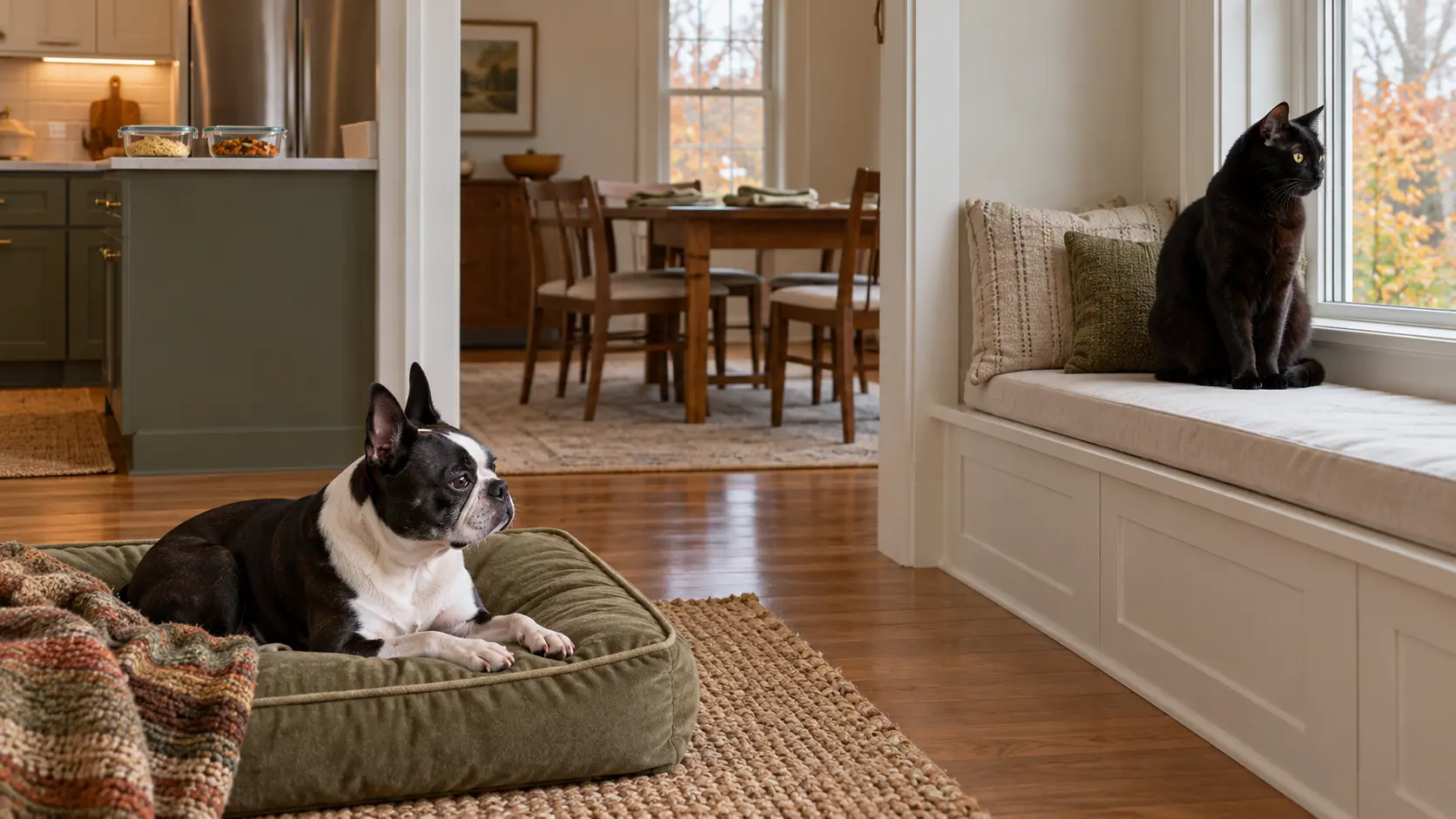
When Thanksgiving dinner moves from the table to the kitchen, the food does not become less interesting to the pets. Plates wait to be scraped, a carving board still smells of turkey, and someone sets a take-home container beside a chair while looking for a coat.
A useful safety plan follows that movement. Decide what your dog or cat will eat, where food will wait, and who will handle the scraps. The goal is to close the gaps between serving, clearing, and putting everything away.
If your pet may already have swallowed a harmful food, bone, or packaging, contact your veterinarian or an emergency veterinary clinic promptly. For suspected poisoning, an animal poison control service can also advise you. Do not wait for symptoms or try to make your pet vomit without professional instructions. [6] [7]
Can dogs and cats have a little turkey?
Plain, cooked turkey without bones or skin may be suitable in a small amount for some pets. That does not make a serving from the dinner plate an appropriate treat. Gravy, seasoning, skin, stuffing, and the bird’s bones change what the pet is actually getting. The AVMA distinguishes plain turkey from the richer scraps that can cause digestive problems. [1]
The simplest plan is to keep your pet’s usual food and familiar, appropriate treats available. If your pet follows a prescribed diet, has food sensitivities, or has a history of pancreatitis, ask your veterinarian before adding holiday foods. There is no single spoonful or slice size that suits every dog and cat.
If you do offer a veterinarian-approved extra, choose one person to give it. Several guests each offering “just a little” makes it difficult to keep track of the total.
Check the preparation, not just the ingredient
A dish called “turkey” or “vegetables” tells you little about everything in it. Check the recipe and packaged ingredients before deciding whether an item belongs anywhere near your pet’s bowl. If you cannot establish what is in a mixed dish, leave it off the pet’s menu.
| Food or item | Why it matters | Practical step |
|---|---|---|
| Turkey skin, drippings, gravy, and fatty trimmings | Rich, fatty scraps can cause digestive upset and may trigger pancreatitis. [2] | Keep the carving tray and dishes with drippings out of reach while clearing. |
| Bones and the turkey carcass | Bones can cause choking, injury, or a digestive blockage. Cats are at risk too. [2] [4] | Move them directly into waste storage that pets cannot access. |
| Stuffing, sauces, or sides containing onion or garlic | These ingredients are harmful to dogs and cats. A familiar-looking dish is not proof of a suitable recipe. [3] [4] | Keep the recipe or ingredient label available; do not feed an unknown mixture. |
| Grapes and raisins | They can cause kidney injury in dogs. [3] | Check fruit dishes, stuffing, and baked goods; contact a veterinary professional if a dog eats them. |
| Chocolate, alcohol, or foods containing xylitol | Chocolate and alcohol are dangerous to pets. Xylitol is particularly dangerous to dogs and can also appear on labels as birch sugar or wood sugar. [2] | Put desserts, drinks, and sweetened products away; keep packaging if an exposure occurs. |
| Unbaked yeast dough | In dogs, dough can expand in the stomach and produce alcohol as it ferments. [3] | Let dough rise in a location the pet cannot enter or reach. |
This table is not a complete list of hazards and cannot establish a safe dose. When something has been eaten, the exact product, amount, animal, and timing matter more than a general “safe foods” list.
Give guests one clear feeding rule
Before anyone starts serving, explain who is handling the pets’ food. An uncomplicated message works: “Please leave the pets’ feeding to me, and bring used plates straight to the kitchen.” It gives guests something specific to do without asking them to remember every ingredient in the meal.
Decide where your pets will spend the busiest part of dinner. For a cat who needs distance from visitors, Cornell recommends a quiet place with access to essentials such as water, food, a litter box, and a resting spot. [4] Choose an arrangement your animal can use comfortably; a dog gate should not be assumed to contain a cat.
Keep chairs, side tables, and low serving areas in mind when planning where dishes will wait. “Off the floor” is not the same as inaccessible.
Make clearing the table part of the plan
Choose a clearing route before the meal. For example, one adult can carry dishes directly to the kitchen while another keeps the pets in their comfortable space. Scraps go into secured waste storage; food being kept goes into appropriate containers. This is a suggested household routine, not a tested guarantee.
| When | One person takes responsibility for | Check before moving on |
|---|---|---|
| Before serving | The pets’ meal and the guest feeding rule. | Everyone knows whom to ask before offering food. |
| While clearing | Moving plates and the carving tray directly to the kitchen. | No plates are waiting on chairs or low tables. |
| When packing leftovers | Keeping filled containers and food bags inaccessible. | Take-home food stays secured until handed to the guest. |
| After cleanup | Checking the dining area, kitchen floor, and waste storage. | No scraps or loose packaging remain accessible. |
The empty bag still needs attention
Snack bags and food-storage bags can trap a pet’s head and cause suffocation. Their danger does not depend on whether much food remains inside. The FDA recommends cutting the sides of discarded bags open or cutting them into pieces, then disposing of them in trash the pet cannot access. [5]
Use secured waste storage throughout cleanup, not only when the kitchen is finished. A tied bag waiting beside the door is still within reach. If a pet is found with its head trapped in a bag, carefully remove the bag and contact a veterinarian or emergency veterinary clinic immediately. [5]
If something goes missing, collect details and call
Separate your pet from the remaining food or packaging. Keep the product label, recipe, or a photo of what was eaten. Tell the veterinary professional your pet’s species and approximate weight, what may have been swallowed, how much is missing, when it happened, and any changes you have noticed. Say “unknown” when you do not know; do not delay the call to reconstruct every detail. [6]
Breathing difficulty, collapse, or rapid deterioration needs emergency veterinary care. Do not use home antidotes or induce vomiting unless a veterinary professional specifically directs you to do so. [6] [7]
In the United States, you can contact Pet Poison Helpline at 855-764-7661 or ASPCA Animal Poison Control at 888-426-4435. Consultation fees may apply. Keep your regular veterinarian’s number and the nearest emergency hospital’s details available before the holiday. [6]
A calmer end to dinner starts with a clear handoff: someone handles the pets, someone clears the food, and someone checks the waste. Once those jobs are finished, the family can settle down together without leaving the leftovers within reach.
General educational information, not a diagnosis or an individual treatment plan.
Continue exploring
- Halloween Calm Night Plan for Dogs and Cats
- Dog Body Language: Recognizing Stress and Responding Safely
- How to Keep an Indoor Cat Entertained
Sources
- American Veterinary Medical Association: Thanksgiving pet safety.
- FDA: Keep Your Dogs and Cats Safe From Holiday Hazards.
- Cornell Riney Canine Health Center: Holiday hazards for dogs.
- Cornell Feline Health Center: Beware Holiday Hazards, Thanksgiving section.
- FDA: Snack Safely—Keep Your Pets Safe from Snack Bag Suffocation.
- Cornell Riney Canine Health Center: First-aid for poisonous substances.
- Pet Poison Helpline: Emergency instructions for pet poisoning.
Reviewed October 26, 2026.