
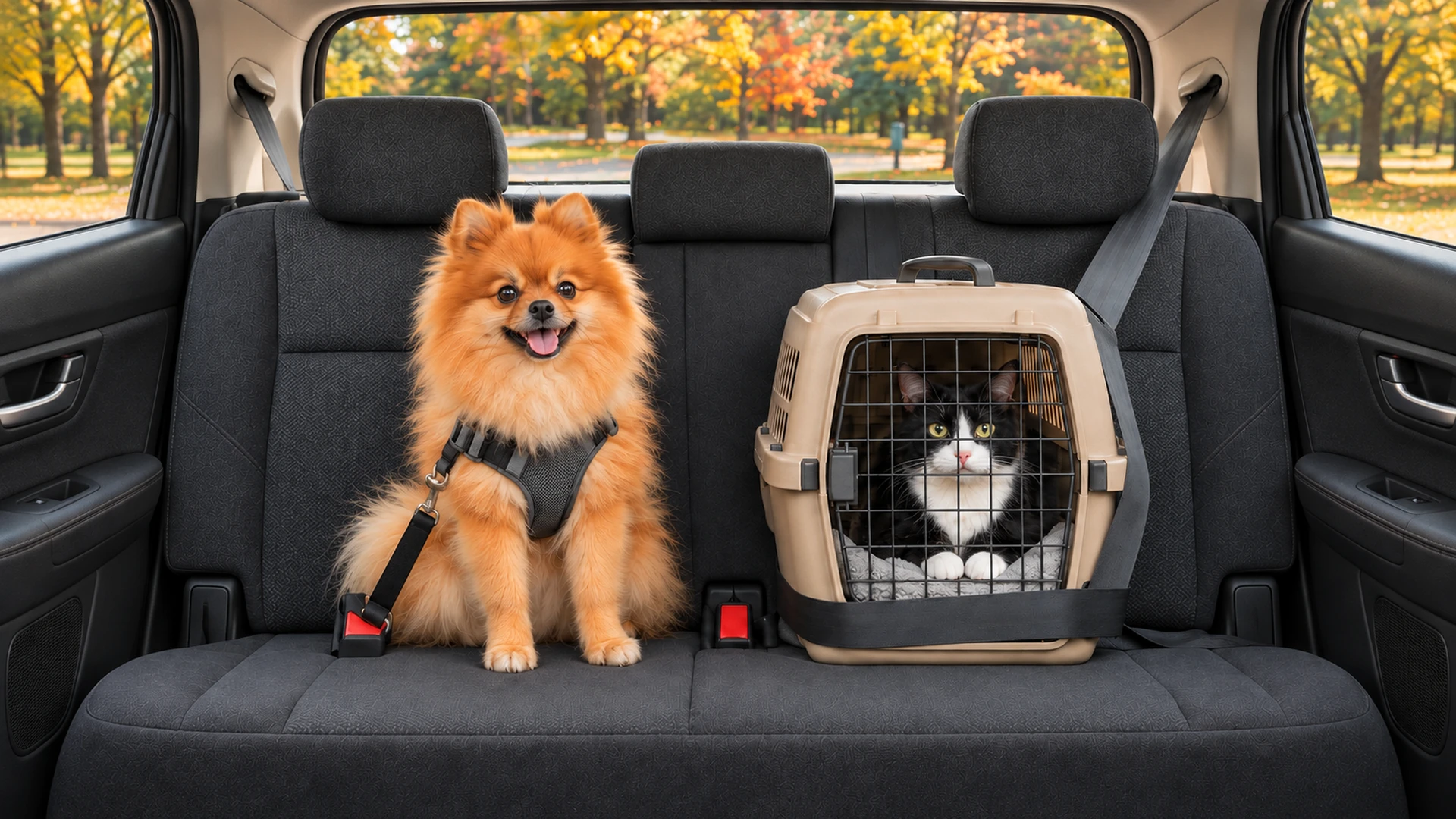
The first useful decision on a road trip with a dog or cat happens before you pack the trunk. Decide where your pet will ride, where you can stop without opening a door into traffic, and what you’ll need to set out when you arrive. Keep water and cleanup supplies within reach. Pack the bed, toys, and first meal together so you can get your pet settled without unloading the whole car.[1]
Plan the first stop and the first night before you leave
Mark a quiet rest area or park and a backup farther along the route. If you’re staying overnight, ask whether the property accepts your animal’s species, size, and number of pets. Save the address and phone number of an emergency veterinary hospital on the route and one near your destination. For interstate trips, use the USDA’s state-by-state directory to check whether your destination requires vaccination records, a health certificate, or other paperwork.[2][3][4][5]
Check your pet’s ID and the phone number in the microchip registry. If the car or carrier is new to your pet, start with short, low-pressure practice well before the trip. Follow your cat’s pace with the carrier practice plan. If your pet already panics, gets sick on short rides, or needs medication or meals at set times, call your veterinarian before departure so you have a plan for this trip.[5][6][7]
Set up the car for the animal riding in it
Dogs. Use an automotive harness tested for crash protection or an appropriate travel crate, secured as directed for the equipment and vehicle. A harness setup belongs in the back seat. Check the fit and attachment before each leg. Keep the walking leash handy for stops. An ordinary walking harness or collar is for handling on the ground and does not provide the protection of an automotive restraint.[6][8]
Cats. Use a closed, ventilated carrier with room to stand, turn around, and lie down. The Feline Veterinary Medical Association advises securing the carrier on the vehicle floor behind a front seat. Use a seat belt around the carrier only if the carrier is certified for crash protection and its instructions specify that setup. A flat towel or absorbent liner makes cleanup easier. Leave the vents clear.[5][7][9]
Secure the bags too. Leave enough room to reach the carrier latch or leash without shifting a suitcase. This makes it easier to check your pet at a stop without rearranging the car at the roadside.
Make the stop work for your pet
For dogs, put a safe stop on the route about every two hours as a starting point. The Merck Veterinary Manual recommends this interval for water and bathroom breaks. Adjust the plan around the dog’s usual routine, age, health, and what you see on the drive. If the scheduled stop has heavy traffic or nowhere safe to walk, use your backup location. For a cat, a stop is a chance to check comfort and offer water safely. Opening the carrier in a busy parking lot creates an escape risk.[10][2][11][9]
| Moment | Dog | Cat |
|---|---|---|
| Before a car door opens | Clip on the walking leash before releasing the travel restraint. | Check that the carrier door is latched. Keep the cat inside while people get in and out. |
| During the break | Offer fresh water and give the dog time to sniff, walk, and relieve themselves away from traffic. | Check the carrier temperature and bedding. Offer water without letting the cat loose. Plan litter access ahead of a long drive. |
| Before you drive again | Reconnect the travel restraint and stow the walking leash. | Check the latch, vents, and carrier position before leaving. |
For a long drive, pack your cat’s usual litter and a small tray. A roomy travel enclosure may accommodate a tray if it can still be secured as designed and the cat has room to rest away from the tray. If that setup will not fit safely, plan access in a secure indoor space, such as an overnight room. Bring spare liners for accidents. During a stop for food or fuel, keep a responsible adult with the pet in a safe, temperature-controlled setting. Never leave a pet unattended in a parked car.[11][7][9]
Pack a road bag and a first-night bag
Keep within reach. Water and a bowl, the dog’s leash and waste bags, spare towels or carrier liners, a bag for soiled items, medications due in transit, a basic pet first-aid kit, and a copy of your travel and veterinary information. Carry the supplies you’ll need for cleanup without opening all the luggage.[5][9][1]
Open on arrival. Pack portions of the usual food, familiar dishes, a bed or blanket, and one or two toys your pet already uses. For cats, add the litter tray, familiar litter, scoop, and disposal bags. Bring enough of a prescribed diet or medication for the trip, including a delay if your supply allows. Use the feeding plan your veterinary team recommends for a pet with medical needs or a history of carsickness. Offer meals when parked in a secure setting or once settled indoors, and avoid a large meal just before departure.[11][6][9][1]
Settle your pet before you unpack
At a hotel or rental, take the dog for a short leash break, then set out water and the familiar bed. Let the dog explore the room with you. If they settle, offer a brief play session with a familiar toy. If they’re restless or tired, give them a quiet place to lie down first. Follow the lodging rules and plan around your dog’s ability to settle before considering any time alone.[6][3]
Carry the cat into a closed, quiet room before opening the carrier. Check windows, exterior doors, and places where a frightened cat might get stuck. Put water, familiar food, and the litter tray in accessible spots, with the tray away from the food. Leave the carrier open as a retreat. If the cat chooses to hide, let them come out at their own pace. Offer familiar play when they’re ready to engage.[12]
Know when to change the plan
Drooling, restlessness, and vomiting can occur with motion sickness, and fear of the car can start before the vehicle moves. Tell the clinic when the signs begin, whether they ease after stopping, and whether they also happen away from the car. Ask before giving a human motion-sickness medicine, a sedative, or a dose prescribed for another pet. Get urgent veterinary help for difficulty breathing or collapse, and seek emergency care if overheating is suspected. A stop to assess the animal or get help takes priority over the arrival time.[11][13][14]
If you can’t arrange safe transport and a comfortable stay for an optional trip, consider leaving your pet with a trusted caregiver. The pet sitter care plan helps you hand off their routine. If they’re coming along, make sure the first stop and the first-night bag are ready before you pull out of the driveway.
Make your road trip plan
Use the two-page Pet Road Trip Planner to record the route, emergency contacts, supplies, stops, and first-night setup. Fill it in on your computer or print a blank copy. The planner is an editorial tool for organizing the trip around your pet’s needs.
A CURIOUS LOOK AT LIFE WITH PETS
Continue
Exploring.
Keep following your curiosity.
There’s more to discover.
Why Does My Cat Hide When the Carrier Comes Out? A Gradual Training Plan
Help your cat approach the carrier and practice for the next vet visit.
Explore the article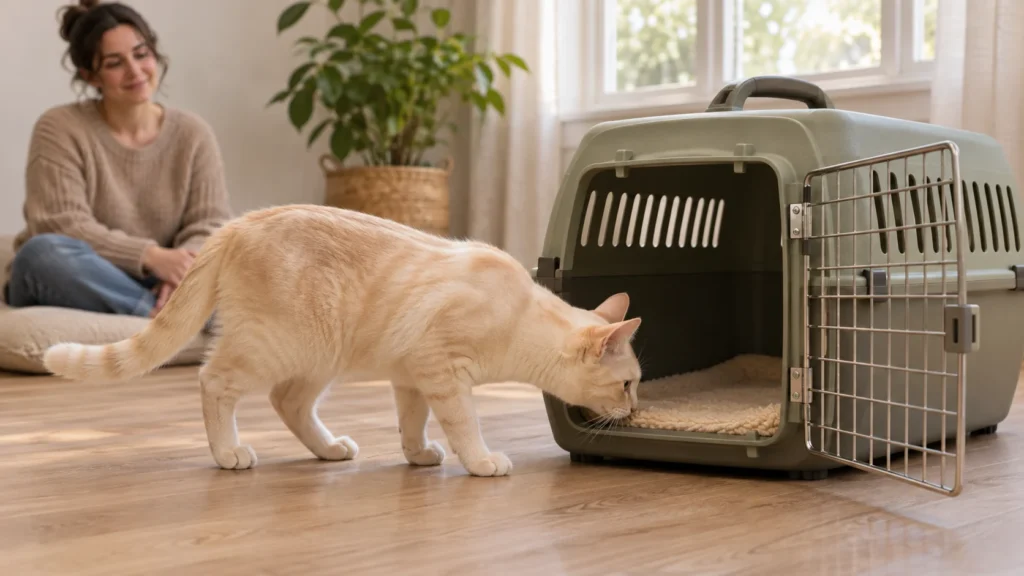
Pet GPS Trackers vs. Microchips: What Each Can and Can’t Do
Understand how tracking and permanent identification work together.
CARE & PLANNINGLeaving Your Pet With a Sitter? Build a Care Plan They Can Actually Use
Put routines, contacts, and backup plans in one practical care record.
Sources
- Merck Veterinary Manual. Pet Travel Kit.
- VCA Animal Hospitals. Road Trip Safety Tips.
- VCA Animal Hospitals. Traveling With Your Pet: Pet Friendly Hotels.
- USDA Animal and Plant Health Inspection Service. Take a Pet from One U.S. State or Territory to Another.
- Centers for Disease Control and Prevention. Pet Travel Safety.
- Cornell University College of Veterinary Medicine. Traveling Safely With Your Dog: Cars, Planes and Pet-Friendly Stays.
- Feline Veterinary Medical Association. 2025 Transportation of Cats in Motor Vehicles Position Statement.
- Center for Pet Safety. Pet Travel Seat Pilot Study Report Summary.
- VCA Animal Hospitals. Road Trips and Car Travel With Your Cat.
- Merck Veterinary Manual. Traveling by Car With Pets.
- U.S. Food and Drug Administration. Travel Training for You and Your Pets.
- VCA Animal Hospitals. Moving to a New Home With Cats.
- Merck Veterinary Manual. Motion Sickness in Animals.
- Merck Veterinary Manual. Evaluation and Initial Treatment of Dog and Cat Emergencies.